
Ancient Nutrition Multi Collagen Protein: Supporting Healthy Skin from the Inside Out

Tag Archives: Dermatology

Woman with glowing skin representing collagen support for healthy skin, hair, and nails.As we age, our body’s natural collagen production begins to slow down. And once we hit age 30, collagen levels gradually decrease each year. This can contribute to fine lines, wrinkles, thinner hair, brittle nails, and a loss of skin elasticity.

While we can’t stop the aging process, there are ways to help.

At The Neiman Dermatology Building, we believe healthy skin starts with a comprehensive approach. Dermatology treatments, medical-grade skincare, and daily sunscreen are all important. But proper nutrition and high-quality supplements can also play a role in supporting healthy skin and hair.

One product many patients love for this is the Ancient Nutrition Multi Collagen Protein.


What Is Ancient Nutrition Multi Collagen Protein?

Ancient Nutrition Multi Collagen Protein is a premium collagen powder that contains 10 different types of collagen from multiple sources. Unlike many collagen options that contain only one or two collagen types, this formula is designed to support the skin, hair, nails, and joints.

The collagen is hydrolyzed, which means it is broken down into smaller parts for better absorption within the body.


What Are the Benefits of Collagen?

Collagen is the most abundant protein in the body and helps provide structure and strength to your skin, hair, nails, bones, and joints.

As collagen production naturally declines with age, many people choose to add collagen peptides to their daily routine to help support:

  • Healthy-looking skin
  • Skin hydration
  • Skin elasticity
  • Fine lines and wrinkles
  • Stronger hair
  • Healthier nails
  • Joint support

While collagen won’t stop aging, it can be a helpful part of an overall healthcare routine.


Can Collagen Help Hair Health?

Healthy hair depends on many factors, including genetics, hormones, nutrition, and scalp health.

Although collagen isn’t specifically a treatment for hair loss, it does provide amino acids that help support the proteins involved in healthy hair growth and structure.

Many patients combine the collagen with supplements Nutrafol as part of their overall hair wellness routine.


How Long Does It Take to See Results?

Collagen doesn’t work overnight.

Most people who take collagen consistently begin noticing improvements in their skin, hair, or nails after about 8 to 12 weeks. As with any supplement, results vary from person to person.


Healthy Skin Starts with a Complete Routine

Collagen is just one part of maintaining healthy skin.

For the best results, we also recommend:

  • Wearing sunscreen every day
  • Using medical-grade skincare products
  • Eating a healthy diet
  • Staying hydrated
  • Scheduling regular skin examinations

Taking care of your skin from both the inside and outside can help you maintain healthier-looking skin for years to come.


Interested in Learning More?

If you’re interested in Ancient Nutrition Multi Collagen Protein or would like recommendations for other products that support healthy skin and hair, our team is happy to help.

Stop by The Neiman Dermatology Building or contact our office to learn more.

Hair loss and thinning are common concerns affecting both men and women. At the Neiman Dermatology Building, we evaluate a variety of causes of hair loss and thinning, including androgenetic alopecia, telogen effluvium, hormonal hair loss, scalp conditions, and medication-related shedding.

Because some forms of hair loss can progress over time, early evaluation is often important for determining the most effective treatment approach.

Woman Inspecting Hair Loss

Androgenetic Alopecia

Androgenetic alopecia or pattern hair loss is the most common cause of hair thinning in both men and women and is influenced by genetics and hormones.

Common signs include:

  • Receding hairline
  • Thinning at the crown
  • Widening of the part
  • Diffuse thinning throughout the scalp

Treatment options include:

  • Minoxidil
  • Finasteride
  • Hair transplantation

Telogen Effluvium

Telogen effluvium or stress-induced hair loss is a temporary form of hair shedding that can be caused by illness, surgery, childbirth, rapid weight loss, and/or nutritional deficiencies.

Common signs include:

  • Increased shedding
  • Hair coming out excessively during brushing or washing
  • Diffuse thinning throughout the scalp

Hormonal, Nutritional, and Medical Causes

Hair thinning may also be associated with:

  • Menopause
  • Thyroid disorders
  • PCOS
  • Iron deficiency
  • Low vitamin D
  • Certain medications
  • Scalp conditions

Symptoms may include itching, burning, flaking, scalp tenderness, or progressive thinning.


When Should You Seek a Hair Loss Evaluation?

It may be time to schedule an appointment if you notice:

  • Sudden increased shedding
  • Progressive thinning
  • Bald patches
  • Receding hairline
  • Widening of the part
  • Changes in hair density

The team at the Neiman Dermatology Building provides personalized hair loss evaluations for men and women throughout Buffalo and Western New York.

When it comes to the field of dermatology there are a lot of misconceptions out there. That’s why we decided to put together a list of some of the more common ones to help debunk those assumptions.Beautiful Woman Dermatology

Myth: Foods can cause acne.

Now while what you eat can have an influence on the health of your skin, in regards to acne, is usually correlated to genetics. Although foods cannot cause you to get acne, it is possible for them to contribute to it, however.

Myth: Genetics determine how your skin will age.

Another common myth is that genetics play a large role in how your skin ages. Although genetics can play a role, a bigger one is played by your lifestyle and overall health.

Myth: If I get a base tan at a salon, I won’t sunburn outdoors.

This one couldn’t be further from the truth. A tan is actually a sign of damage to your skin and in no way prevents further damage from future sun exposure. The best way to prevent sunburn is to avoid tanning and use sunscreen.

Myth: Any sunscreen will adequately protect my skin from the sun.

A sunscreen must have an SPF of at least 30, combined with ingredients such as titanium dioxide and zinc oxide.  This will help to block both UVA (long-wave radiation which can lead to wrinkling and aging) and UVB (short-wave radiation which can cause sunburn) rays, both of which can lead to skin cancer.

Myth: Once I put on sunscreen for the day, it is not necessary to apply it again.

Sunscreen must be reapplied every two hours or after exposure to water.

Myth: If I shave my hair, it will grow back thicker.

Unfortunately for people with thinning hair, this is not true. Although the hair may appear thicker after shaving, this is just an optical illusion. The hair is exactly the same thickness it was before shaving it.

As you can see, there are a lot of myths in relation to dermatology, but hopefully being aware of some will help you in the future.

Woman FacemaskDue to the spread of COVID-19, the CDC made a recent recommendation that everyone should be wearing face masks in public. Although face masks provide important protection from the virus, wearing them for an extended period can also lead to skin irritation. Here are some things you can do to avoid that.

  1. Make sure the mask fits comfortably and snug. If it is too tight, the more likely it will cause a skin reaction.
  2. Try to take off the mask as much as possible when not in public. When doing this one, make sure to take into consideration proper social distancing.
  3. Change or wash it regularly depending on the frequency of use. When breathing in the mask, moisture collects in the area and can provide the perfect breeding ground for a number of different bacteria. This can lead to skin conditions such as folliculitis.
  4. Cleanse the skin. Try to avoid products containing drying ingredients as it can be further aggravated with the use of a face mask. Moisturizing is of the utmost importance, especially before, because it can serve as a protectant for the skin.
  5. Moisturize/hydrate the skin. This one is especially important prior to, as it can serve as a protectant for the skin. Avoid oil-based moisturizers as they can block the pores leading to breakouts.

If you are already noticing skin irritation due to wearing a facemask, try to identify the cause and take the above tips into consideration. If the condition still does not improve, contact our office right away.

Source: Centers for Disease Control & Prevention (CDC)

All of a sudden you have a lot more time on your hands. What should you do? Watch more news? Binge-watch ‘Tiger King’ on Netflix? Or focus on your skin and give it the TLC it deserves? We personally like the last option. So, here are some simple, but yet important, skincare tips that you can do in the comfort of your own home:

Cleanse Your Face. SkinCeuticals makes great cleansers! We recommend the Gentle Cleanser, Simply Clean or the LHA Cleansing Gel (depending on your skin type).
Exfoliate After Cleansing. Doing this after cleansing provides you with a clean base to work with. Thus, making it easier to unclog pores, prevent acne, and remove dead skin cells.
Use a Moisturizer. It helps to lock in moisture which in turn prevents the skin from drying out. It’s important to do AFTER cleansing and exfoliating.
Get a Good Night’s Sleep. Last but certainly not least! Not getting enough sleep can actually cause inflammation in the skin, increasing the risk of flare-ups in conditions such as acne, eczema, and psoriasis. The National Sleep Foundation recommends anywhere between 7 to 9 hours of sleep per night.

Follow these tips and your skin will benefit. Not to mention, it is so simple, there will be plenty of time left to binge-watch ‘Tiger King’ if you so wish!

Although the use of hand sanitizers and soap should already be part of a healthy routine, the current threat of coronavirus (COVID-19) has increased use significantly. All you need to do is look at the store shelves where they’re stocked to know that. The demand has been so high in fact, that Amazon and eBay have put restrictions on the sale of these products in an attempt to prevent price gouging. So, with using hand sanitizers and soap more frequently, what can you do to protect the skin on your hands?Washing hands

Moisturize immediately after use. This is especially true for hand sanitizers that contain alcohol (a drying ingredient in itself). Cream or lotion-based moisturizers are the best options.
Avoid products containing fragrances, perfumes or dyes. Instead, opt for products that contain vitamin E and aloe.
Limit hand washing to 20 seconds, no more. The Centers for Disease Control & Prevention (CDC) recommends this timeframe. Any longer poses the risk of drying the skin out.
When washing, avoid water that is too hot or cold. Use lukewarm water.

With or without an epidemic, regular hand sanitizer and soap use are important to prevent the spread of germs. Combining that with the above tips will help the health of your skin.

Sources: American Academy of Dermatology (AAD), Centers for Disease Control & Prevention (CDC)

Dermoscopy, also known as dermatoscopy, is a noninvasive technique primarily used to examine skin lesions. Utilizing a handheld device called a dermatoscope, the objective is to differentiate between benign and malignant tumors.

Featuring a high-quality magnifier and a polarized light system, the dermatoscope is able to see areas of the skin not visible to the naked eye. This significantly reduces the rate of unnecessary biopsies and leads to more accurate melanoma detection. Aside from melanoma detection, dermoscopy can also be used to diagnose fungal infections, hair/scalp diseases, warts, and even scabies.

Dermoscopy

A provider using a dermatoscope on a patient.

At our office, all of our providers have been specially trained in dermoscopy. If they notice anything of suspicion, they will follow it very closely. Pictures will be taken, stored, and compared with pictures at the patient’s next visit. If the lesion evolves or changes, it may require a biopsy. If the lesion does not, it most likely is benign.

As you can see, dermoscopy is an important clinical tool and something that no dermatologist (MD, NP or PA) should go without. If you have something of concern on your skin and would like one of our providers to check it out, contact our office today.

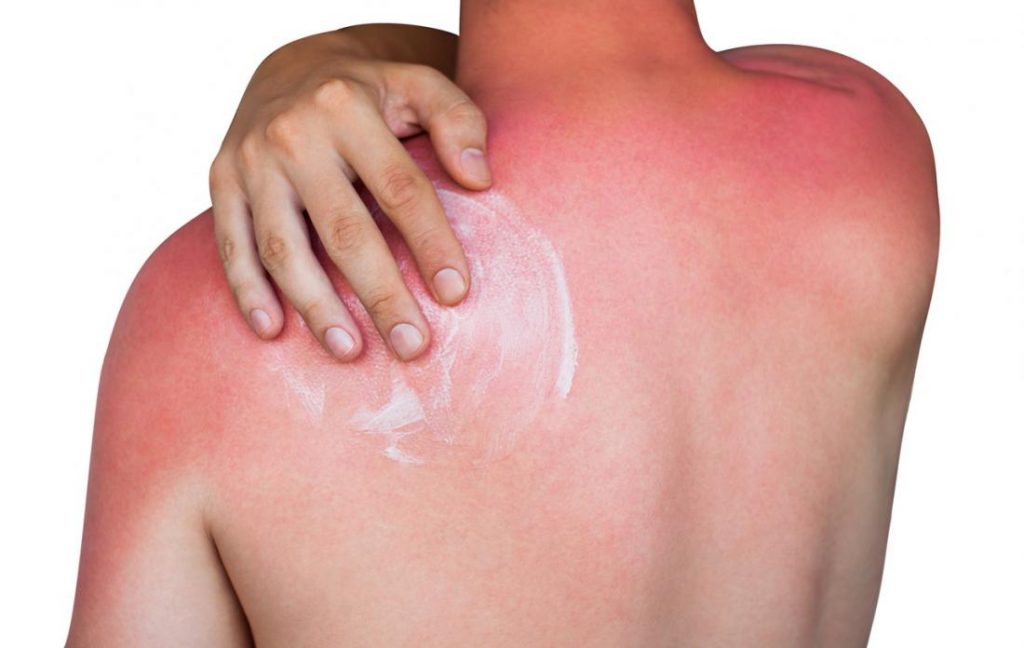
Maybe you fell asleep on the beach, or forgot to pack sunscreen.  However it happened, sunburn can be painful and in severe cases, even dangerous.  If you do get burned:

• Take a cool shower or bath, or apply wet, cold washcloths.
• Avoid products that contain benzocaine, lidocaine, or petroleum (Vaseline).
• Cover blisters with dry bandages to prevent infection.
• Take over-the-counter pain relievers like ibuprofen, but do not give aspirin to children.

Call a doctor if you have a serious reaction:

• Feeling faint or dizzy
• Rapid pulse or rapid breathing
• Extreme thirst, no urine output, or sunken eye
• Pale, clammy, or cool skin
• Nausea, fever, chills, or rash
• Eyes hurt and are sensitive to light
• Severe, painful blisters

Of course, it’s best to protect yourself from getting burned in the first place.  Exposure to the sun’s ultraviolet (UV) rays can increase your risk of developing skin cancer.  The American Cancer Society recommends taking these steps:

• Wear clothing and a wide-brimmed hat to protect as much skin as possible.  Protect your eyes with sunglasses that block at least 99% of UV light.
• Use sunscreen with a sun protection factor (SPF) of at least 30: reapply at least every 2 hours, and after swimming or sweating.
• Avoid direct exposure to the sun, especially between 10 a.m. and 2 p.m., when rays are strongest.
• Avoid tanning beds and sunlamps: both can cause serious long-term skin damage and contribute to skin cancer.

Source: American Cancer Society, Healthy Living

With the huge success of the Marvel Cinematic Universe (MCU), many people have become familiar with some of the franchise’s most popular superheroes. Whether it be Iron Man, Thor, Captain America, or the Hulk, the superheroes have captivated moviegoers throughout the globe for over a decade. With such a unique and iconic look, the Hulk may be the one hero that stands out the most.

hulk-marvel

Characterized as a large mutant monster with green skin, the Hulk developed his appearance from an exposure to gamma radiation. Although the concept of becoming a large mutant monster may not be feasible in real life, it is in fact possible for the color of skin to turn (or appear) green.

Some ways that skin can do that includes:

• Prolonged contact to cheap gold, copper, and certain metals typically found in inexpensive jewelry.
Exposure to strong chlorine levels in water.
During the process of bruising there is a stage where the iron in the blood turns green and can become visible through the skin.
Patients experiencing multiple organ failure may be at risk for unusual pigmentation effects from feeding tube dyes.
Condition known as gangrene can cause the skin to appear green prior to turning black.

If you notice the color of your skin changing, contact your doctor immediately, as it may be a sign of a more serious medical condition.

Psoriasis is a relatively common condition that typically affects the skin and joints. Occurring on the scalp, elbows, knees, and more uncommonly hands and feet, it can lead to painful complications such as arthritis and severe itching. Although there is currently no way to prevent psoriasis, there are a variety of treatment options that can effectively control the condition.

Psoriasis_Treatment

Some treatment options for psoriasis include topical agents, phototherapy, and systemic agents. Typically used for mild cases, topical agents consist of cortisone creams, moisturizers, skin lotions, ointments, and dandruff shampoos. Then for moderate cases, phototherapy or light therapy is utilized. This method of treatment involves exposing the skin to ultraviolet light which in turn suppresses the immune system and reduces the inflammatory response. Exposure must be monitored because too much can lead to burning of the skin, similar to a sun burn. When psoriasis is resistant to these other types of treatment or is considered severe, it is then treated with systemic agents. Systemic agents are prescription medications that are administered orally or through injection.

While all these treatments listed above prove to be beneficial, some can potentially lead to negative side effects. Schedule an appointment with our office today for appropriate diagnosis and treatment of psoriasis.