
Common Causes of Hair Loss in Men & Women

Tag Archives: Topical Minoxidil

Hair loss and thinning are common concerns affecting both men and women. At the Neiman Dermatology Building, we evaluate a variety of causes of hair loss and thinning, including androgenetic alopecia, telogen effluvium, hormonal hair loss, scalp conditions, and medication-related shedding.

Because some forms of hair loss can progress over time, early evaluation is often important for determining the most effective treatment approach.
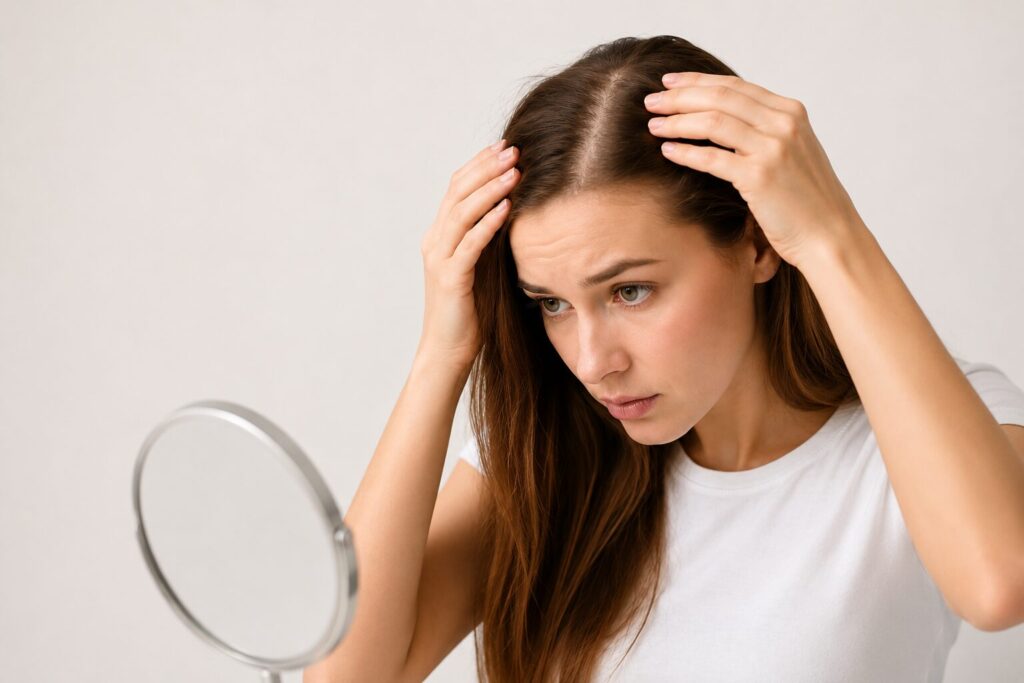
Woman Inspecting Hair Loss

Androgenetic Alopecia

Androgenetic alopecia or pattern hair loss is the most common cause of hair thinning in both men and women and is influenced by genetics and hormones.

Common signs include:

  • Receding hairline
  • Thinning at the crown
  • Widening of the part
  • Diffuse thinning throughout the scalp

Treatment options include:

  • Minoxidil
  • Finasteride
  • Hair transplantation

Telogen Effluvium

Telogen effluvium or stress-induced hair loss is a temporary form of hair shedding that can be caused by illness, surgery, childbirth, rapid weight loss, and/or nutritional deficiencies.

Common signs include:

  • Increased shedding
  • Hair coming out excessively during brushing or washing
  • Diffuse thinning throughout the scalp

Hormonal, Nutritional, and Medical Causes

Hair thinning may also be associated with:

  • Menopause
  • Thyroid disorders
  • PCOS
  • Iron deficiency
  • Low vitamin D
  • Certain medications
  • Scalp conditions

Symptoms may include itching, burning, flaking, scalp tenderness, or progressive thinning.


When Should You Seek a Hair Loss Evaluation?

It may be time to schedule an appointment if you notice:

  • Sudden increased shedding
  • Progressive thinning
  • Bald patches
  • Receding hairline
  • Widening of the part
  • Changes in hair density

The team at the Neiman Dermatology Building provides personalized hair loss evaluations for men and women throughout Buffalo and Western New York.


To the surprise of many, hair loss can be just as much of a concern for women as it is for men. Jennifer Lopez recently brought attention to the issue with a surprising revelation that she uses the hair loss treatment minoxidil.

In a post on her Instagram page, Lopez explained that she learned about minoxidil from her hairstylist early in her career and has continued using it ever since. 

Instagram Jennifer Lopez

Jennifer Lopez applying minoxidil to her scalp.

What Is Minoxidil?

Minoxidil is a medication commonly used to treat thinning hair and certain types of hair loss. The oral form is available by prescription, while topical minoxidil is available over the counter in formulations such as foam and liquid.

This makes topical minoxidil one of the more accessible treatment options for people who are concerned about thinning hair and want to explore an at-home treatment.

Interested in trying topical minoxidil? You can browse over-the-counter foam and liquid options:

[View topical minoxidil options on Amazon →]

When you buy through links on our website, we may earn an affiliate commission. 

How Does Minoxidil Work?

Originally introduced in 1979 as an oral medication for high blood pressure, doctors noticed that some patients experienced increased hair growth. This eventually led to the development of topical minoxidil specifically for treating hair loss.

Minoxidil works by helping to enlarge miniaturized hair follicles and extend the hair growth phase. Over time, this can help individual hairs become thicker and may slow further hair loss.

Can Minoxidil Help With Hair Loss?

For certain types of hair loss, minoxidil can be one of the most effective treatment options. However, it does not work for every cause of hair loss.

Results take time. Some people may begin to notice changes as soon as 3-4 months, but it can take up to a year to see the full benefit.

Because minoxidil works only while it is being used, continued treatment is often necessary to maintain the results.

Is Minoxidil Safe?

Minoxidil is generally well tolerated when used as directed. Some people may experience mild scalp sensitivity, irritation, or dryness. Unwanted facial hair can also occur but is not common.

Temporary increased shedding can occur when treatment is first started and improves with continued use.

Minoxidil should not be used during pregnancy or breastfeeding. If you have a medical condition or are unsure whether minoxidil is appropriate for your type of hair loss, talk with your healthcare provider before starting treatment.

Choosing the Right Hair Loss Treatment

Not all hair loss is the same. Thinning can have many possible causes, and the most appropriate treatment depends on what is causing it.

If you’re experiencing thinning hair or hair loss, determining the cause is an important first step. The earlier hair loss is addressed, the better the opportunity to identify the cause and find an appropriate treatment.

If topical minoxidil is appropriate for you, browse the selection of over-the-counter minoxidil products here:

[Shop topical minoxidil options on Amazon →]