Summer means spending more time outdoors, whether you’re at the beach, working in the yard, or simply enjoying a weekend with family and friends. While sunshine has its benefits, too much sun exposure can have lasting effects on your skin.
Over time, ultraviolet (UV) rays can cause premature aging, wrinkles, sun spots, uneven pigmentation, and most notably, increase your risk of developing skin cancer.
The good news? Most sun damage is preventable. And there are a few simple habits that can go a long way toward keeping your skin healthy, not just this summer, but all year long.
How Does the Sun Damage Your Skin?
Many people think sun damage only occurs after getting a sunburn, but that’s not the only case. Your skin is exposed to UV rays every day, even when it’s cloudy. And daily activities like driving, gardening, walking the dog, or running errands all add up over time.
There are two types of ultraviolet rays that affect your skin:
UVA Rays
UVA rays penetrate deep into the skin where they break down collagen and elastin (the proteins responsible for keeping skin firm and youthful).
Over time, repeated UVA exposure can lead to:
- Fine lines and wrinkles
- Loss of skin elasticity
- Uneven skin tone
- Brown spots and sun spots
- Premature aging
Because UVA rays can pass through glass, you’re exposed even while driving or even sitting near a window.
UVB Rays
UVB rays affect the outer layers of your skin and are the primary cause of sunburn.
More importantly, UVB rays damage your skin’s DNA, increasing your risk of developing skin cancer, including:
- Basal cell carcinoma
- Squamous cell carcinoma
- Melanoma
Even if you don’t burn easily, repeated UV exposure causes cumulative damage over the years.
Sunscreen Is Your Best Defense
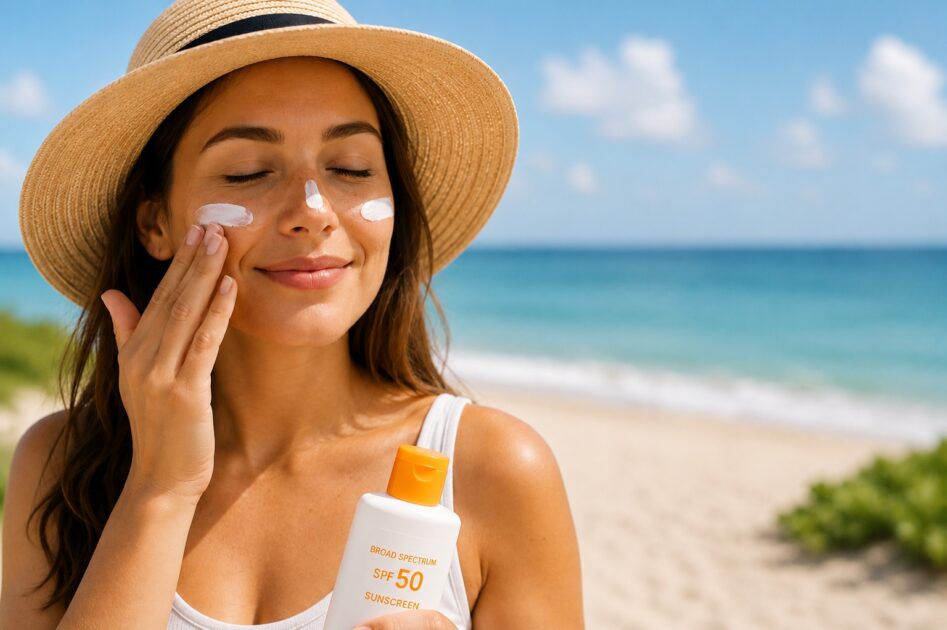
One of the easiest ways to protect your skin is by wearing a broad-spectrum sunscreen of at least 30 daily.
Broad-spectrum means that it protects against both UVA and UVB rays, helping reduce your risk of:
- Sunburn
- Premature aging
- Dark spots
- Wrinkles
- Skin cancer
Applying sunscreen every morning is one of the simplest ways to protect your skin.
Are You Applying Enough Sunscreen?
Most people simply don’t use enough sunscreen to get the protection listed on the bottle.
As a general guideline:
- Face and neck: About two finger-lengths of sunscreen.
- Entire body: About one ounce (roughly a shot glass full).
For the best protection:
- Apply sunscreen about 15 minutes before going outside.
- Reapply every two hours.
- Reapply after swimming or sweating.
Don’t Rely on Sunscreen Alone
Sunscreen works best when it’s part of a complete sun protection routine.
Some ways you can further reduce your UV exposure is by:
- Wearing a wide brimmed hat
- Using UV blocking sunglasses
- Wearing UPF rated clothing
- Seeking shade whenever possible
- Avoiding prolonged sun exposure between 10am and 4pm (this is when the UV rays are strongest).
Can Existing Sun Damage Be Treated?
Yes. While preventing sun damage is always the best approach, many of its visible effects can be improved.
Depending on your skin concerns, treatment options may include:
- Medical-grade skincare products
- Prescription topical medications
- Laser treatments
- Treatment of precancerous lesions
- Other customized treatment options based on your skin
The right treatment depends on your skin type, your goals and the amount of sun damage.
When Should You Schedule a Skin Check?
Annual skin cancer screenings are one of the best ways to detect skin cancer early, when treatment is often simpler and more successful.
Schedule an appointment if you notice:
- A mole changing in size, shape, or color
- A spot that bleeds or won’t heal
- A new or rapidly growing lesion
- A sore that repeatedly comes back
- A mole that looks different from the others
If something doesn’t look or feel right, don’t ignore it. It’s always better to have it evaluated.
Healthy Skin Starts with Prevention
Protecting your skin isn’t just about avoiding a painful sunburn, it’s about reducing your risk of premature aging and skin cancer.
Whether you need a skin cancer screening, have concerns about a changing mole, or want help treating existing sun damage, our team at Lisa S. Ball NP at the Neiman Dermatology is here to help.
Call us today at (716) 688-0020 or click here to schedule your appointment and keep your skin healthy all year long.
 With May being Skin Cancer Awareness Month, it’s a great time to prioritize skin health and learn how early detection can save lives. While most moles are harmless, some can signal a dangerous skin cancer like melanoma. Recognizing the warning signs is one of the most effective steps toward prevention and early diagnosis.