 With May being Skin Cancer Awareness Month, it’s a great time to prioritize skin health and learn how early detection can save lives. While most moles are harmless, some can signal a dangerous skin cancer like melanoma. Recognizing the warning signs is one of the most effective steps toward prevention and early diagnosis.
What Is a Mole?
Moles (also known as nevi) are small, clusters of pigmented skin cells. They can be flat or raised, and range in color from light pink to dark brown or black. Most are usually harmless, but some can signal something very serious and should not be ignored.
The ABCDEs of Melanoma: Five Warning Signs of a Cancerous Mole
To help identify the warning signs of skin cancer, dermatology providers rely on the ABCDEs. It’s a simple but effective checklist to evaluate moles. Here’s what to look for:
A – Asymmetry: One half does not match the other
B – Border: The edges are irregular, blurred, or poorly defined
C – Color: Multiple colors or uneven shades
D – Diameter: Larger than 6 mm (about the size of a pencil eraser), though smaller melanomas are possible
E – Evolving: Changes in size, shape, or color
Other Things to be Aware of
- New moles appearing after age 30
- Rapid changes to an existing mole
- Itching, tenderness, or bleeding
- A mole that stands out or looks noticeably different from the rest (referred to as the “ugly duckling” sign)
Who’s at Higher Risk?
Some people are more vulnerable to skin cancer and should have regular skin examinations, especially if they have:
- Fair skin, light eyes, or light hair
- History of sunburns or tanning bed use
- Family or personal history of skin cancer
- A large number of moles or atypical (dysplastic) moles
Why Early Detection Saves Lives
Melanoma, while serious, is highly treatable when caught early. According to the Skin Cancer Foundation, the 5-year survival rate for early-stage melanoma is 99%. That’s why regular self-exams and yearly professional skin examinations are so important.
How to Perform a Self-Skin Exam
Once a month, use a mirror or ask a partner to help you check out the following areas:
- Scalp
- Back and buttocks
- Soles of feet and between toes
- Underarms and behind ears
Take note of any new or changing spots. When in doubt, get it checked out.
Don’t Ignore Suspicious Moles – Schedule an Appointment Today!
This Skin Cancer Awareness Month, take a moment to check your skin. If you notice anything unusual, don’t wait. A changing mole could be an early warning sign. Schedule a full body skin examination at the Neiman Dermatology Building to get the expert care and peace of mind you deserve.
Source: The American Academy of Dermatology (AAD), Skin Cancer Foundation
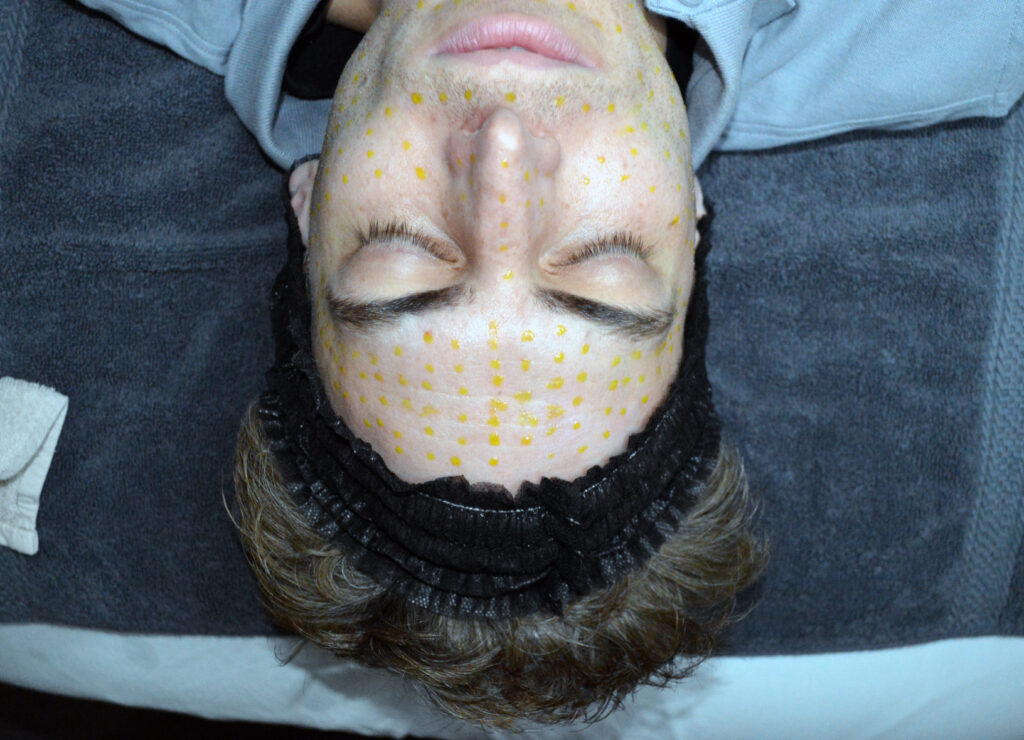 If you’re searching for an amazing skin rejuvenation treatment with no downtime, BioRePeel is the breakthrough treatment you’ve been waiting for. At the Neiman Dermatoloy Building, this innovative peel is quickly becoming a patient favorite for treating acne, fine lines, uneven skin tone, and dullness—with little to no visible peeling.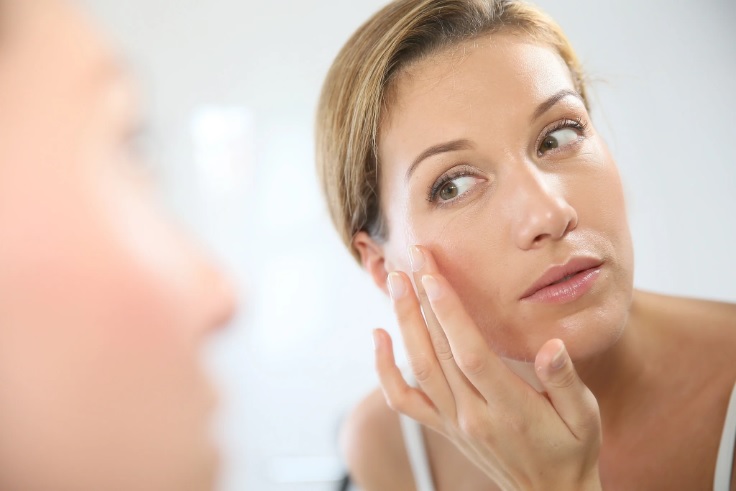
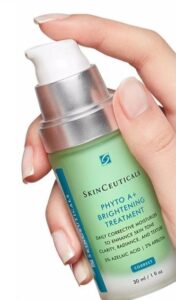 Dark spots, also known as hyperpigmentation, are a common concern for many individuals. Resulting from an excess production of melanin, a natural pigment created by cells called melanocytes, their frequency can vary from one person to another. So, what can you do to address them? We like the SkinCeuticals Phyto A+ Brightening Treatment.
 When it comes to skincare, the majority of our focus usually goes to the face, diligently cleansing, exfoliating, and moisturizing to maintain a healthy glow. But in our quest for flawless skin, there’s one crucial area that often gets overlooked: the scalp. Just as our face needs care and attention, so too does the skin on our scalp. Recognizing this, we adapted the proven effectiveness of the HydraFacial to target scalp health, introducing the
 So, now that school is back in full swing, there’s no better time to establish (or re-establish) a skincare routine. This will not only help you to look your best but to feel it as well.
 For much of the summer, smoke from the Canadian Wildfires (and now Hawaiian) has brought air quality concerns into the national spotlight. Aside from the known risks of inhaling wildfire smoke, it can also pose a serious threat to the skin as well.