Biologics for Psoriasis

Tag Archives: Psoriasis Treatment

Psoriasis is an autoimmune condition that causes raised, red, scaly patches (with or without silver-colored scale) to appear on the skin. Typically found on the scalp, elbows, and knees, it is usually treated with topical creams, corticosteroids, and retinoids. However, for patients who have tried these options to no avail, or have severe symptoms, biologics may be considered.

Biologics are medications that specifically target parts of the immune system that are responsible for the overgrowth of skin cells relating to psoriasis. Administered at our office by injection, they can be a very effective treatment option for patients.
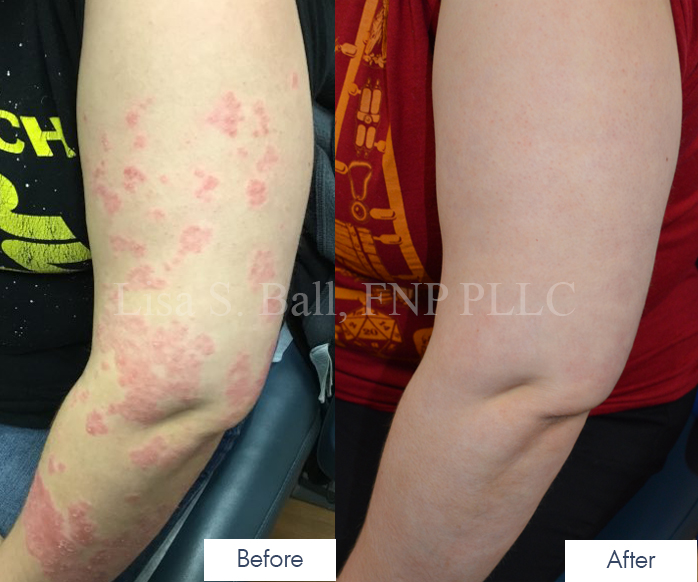
Lisa S. Ball, NP Psoriasis Patient Results

Lisa S. Ball, NP psoriasis patient after biologic treatment.

The following are biologics that we use for patients with psoriasis:

• Cimzia
• Cosentyx
• Humira
• Siliq
• Skyrizi
• Taltz
• Tremfya

It is important to remember that joint pain can sometimes be related to psoriasis. This is called psoriatic arthritis. Psoriasis should be managed as it can be linked to heart disease, diabetes, cancers, as well as other autoimmune diseases. Contact our office today, to see if biologics may be right for you.

Sources: National Psoriasis Foundation, Jonathan G. Turowski, AGPCNP-BC

Back in 2011, reality star Kim Kardashian announced that she suffers from psoriasis. Since that time, she has been influential in raising awareness about the condition. Recently, she shared a shocking photo on her Instagram that brought attention back to it.

Kim Kardashian Psoriasis Instagram

Kim Kardashian showing signs of psoriasis flare-up from recent Instagram post. Source: Kim Kardashian/Instagram

As you can see, the photo shows textbook psoriasis flareups all over her face. A lot of people found the photo quite shocking and can’t believe how she is regularly able to conceal it.

Psoriasis is a common skin condition that affects more than 8 million Americans. Typically developing between the ages of 15-25, symptoms consist of skin redness and irritation with silver-colored scales. Usually occurring on the scalp, face, hands, elbows, knees, and feet, it is believed to occur when the body’s immune system mistakes healthy cells for dangerous or harmful substances.

A common misconception is that psoriasis is contagious, this is not the case. Some things that can contribute to worsening the condition though include too much exposure to sunlight, consumption of alcohol, and even stress. It can be treated in many different ways, with the most common options being topical ointments or creams, lotions, and shampoos.

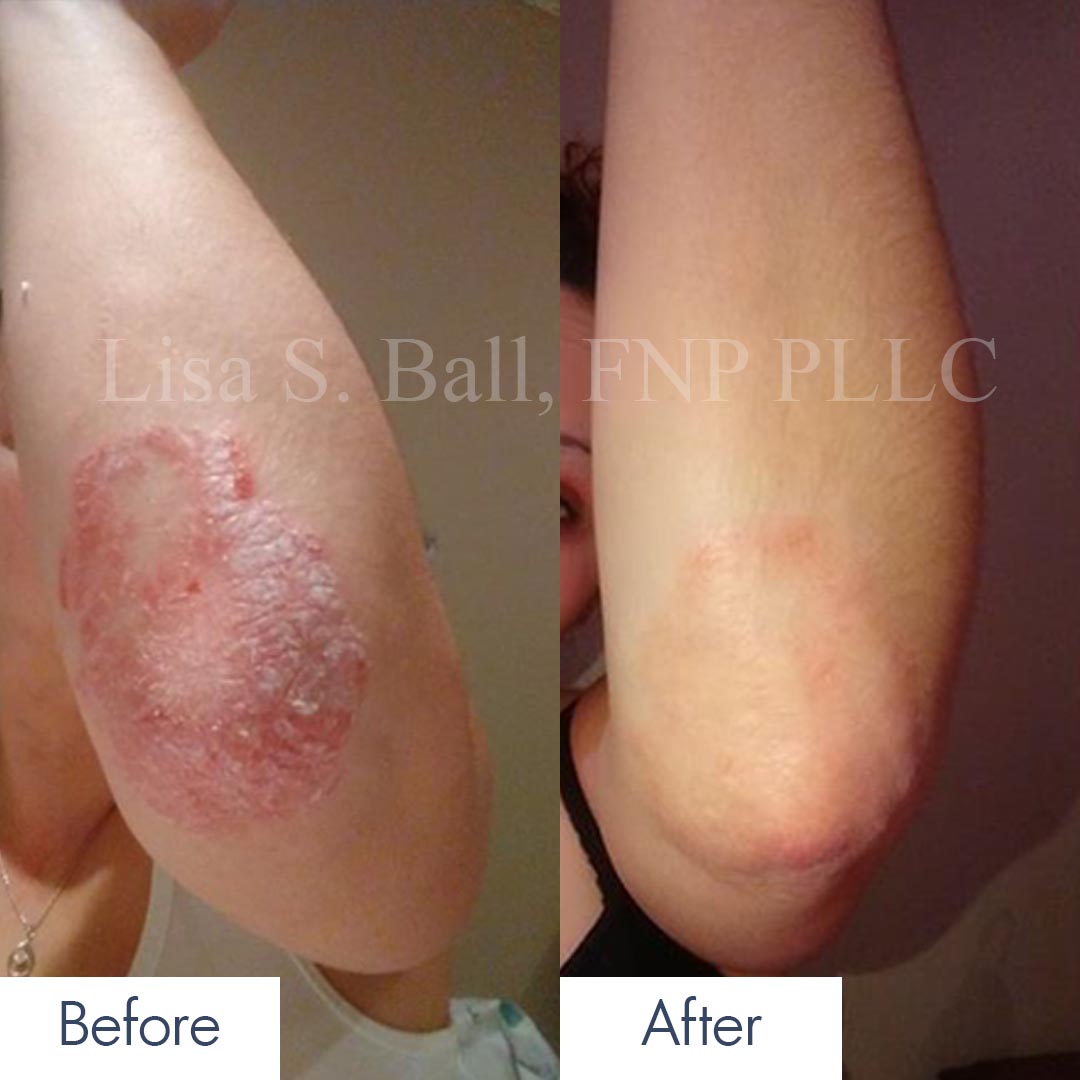
Psoriasis Patient

Lisa S. Ball, NP psoriasis patient after treatment.

Taking care of your skin by regularly moisturizing and cleaning the affected area can also help in maintaining and reducing flare-ups. Although there is no way to prevent psoriasis, there are many ways to manage and treat the condition.


Source: National Psoriasis Foundation

Topical corticosteroids (steroids) are a common treatment option for a variety of dermatological conditions. The reason is that they promote anti-inflammatory responses by suppressing the immune system’s response. Typically prescribed for psoriasis, atopic dermatitis, eczema, and rashes, if prescribed appropriately they can yield very effective results.

This effectiveness however can lead to patients developing a dependency on them. Initially, after stopping the topical steroid, the condition may come back with a vengeance. So quite often, people will continue to apply the steroid even after the condition clears, and in doing so, severe side effects can arise.  Examples include, atrophy of the skin (the consistency in the area of skin where the cream was used becomes comparable to saran wrap) or striae (thick red lines that look like stretch marks). A way to avoid potential addiction is through the use of a stagger program. This can be done by using the topical steroid twice a day for two weeks, then taking one week off.

Although topical steroids are an effective option, if not administered properly it can lead to serious issues.

Psoriasis is a common chronic condition that causes areas of the skin to become red, inflamed, itchy, and covered with scales. It most commonly affects the scalp, elbows, and knees, although psoriasis can also develop on other areas of the body, including the hands and feet. In some people, psoriasis can also affect the joints and lead to psoriatic arthritis.

Although there is currently no cure for psoriasis, effective psoriasis treatments can help control symptoms, reduce inflammation, and improve the appearance and health of the skin. Treatment depends on the type and severity of psoriasis, as well as the areas of the body affected.

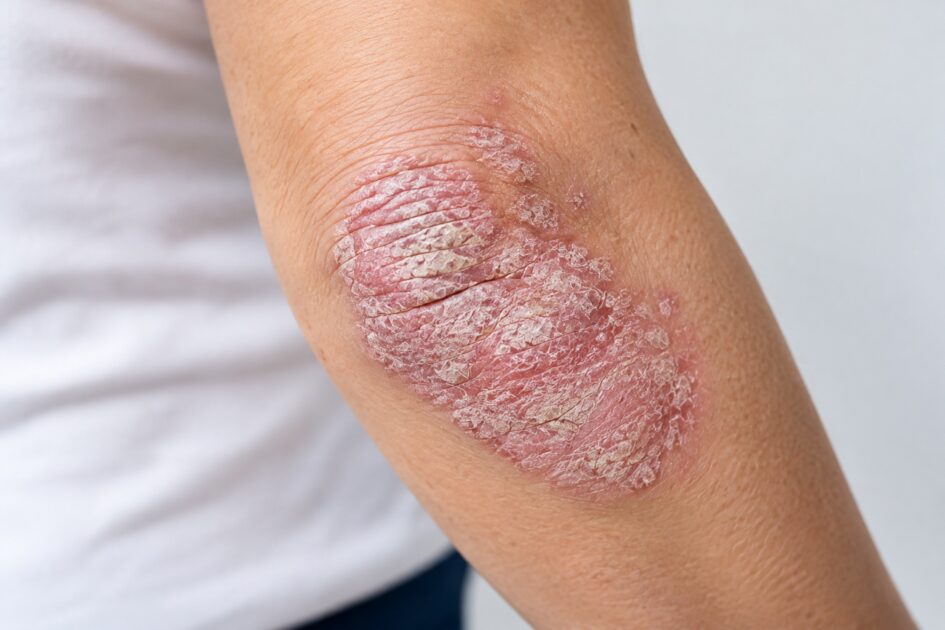
Psoriasis on arm

Psoriasis Treatment Options

There are several treatment options available for psoriasis. Depending on the severity of your condition, treatment may include topical medications, phototherapy, or medications.

Topical Treatments

Topical treatments are commonly used for mild psoriasis and are applied directly to affected areas of the skin. Depending on your individual needs, treatment may include corticosteroid creams, moisturizers, ointments, lotions, or medicated shampoos for scalp psoriasis.

Phototherapy

For some patients with moderate psoriasis, phototherapy, also known as light therapy, may be recommended. Phototherapy carefully uses ultraviolet (UV) light to help slow the rapid growth of skin cells and reduce the inflammation associated with the condition.

Because excessive UV exposure can cause skin damage and burns, phototherapy should be performed under medical supervision.

Systemic Treatments

When psoriasis is moderate to severe, widespread, does not respond adequately to topical treatments or phototherapy, medications may be considered. These prescription treatments work throughout the body and may be taken orally or administered by injection.

The appropriate psoriasis treatment depends on several factors, including the severity and location of the psoriasis, previous treatments, and your overall health.

Find Psoriasis Treatment in Buffalo, NY

Because psoriasis can vary significantly from person to person, an individualized treatment plan is important. Our experienced providers can evaluate your skin and recommend an appropriate approach to psoriasis treatment based on your situation specifically.

Schedule an appointment today with our office today to discuss your psoriasis treatment options.